There has been a big change in animation in the last hundred years. It has come a long way from hand-painted clay figurines moving in frame-by-frame animation to complex digital scenes rendered in real-time. Artists today have more possibilities to be creative than ever before.
However, one argument that is still raging is stop motion vs digital animation.
Both techniques have been essential in the making of some of the most memorable films and ads of all time. In an age of digital animation, stop motion still captivates audiences with its unique, homemade charm.
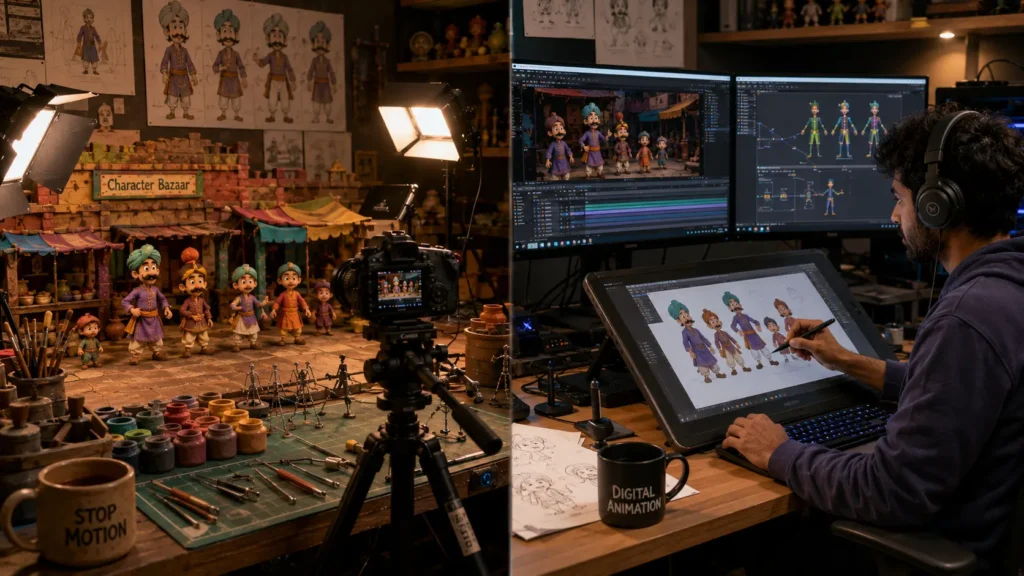
If you’re a student of animation and trying to select what to specialise in, or an artist looking to explore new avenues of creative expression, learning both mediums will allow you to make more educated professional and artistic decisions.
What is Stop Motion Animation?
Stop-motion animation is a technique in which physical objects are photographed one frame at a time. The animator moves the object a little between frames. The items appear to move when the frames are played in sequence.
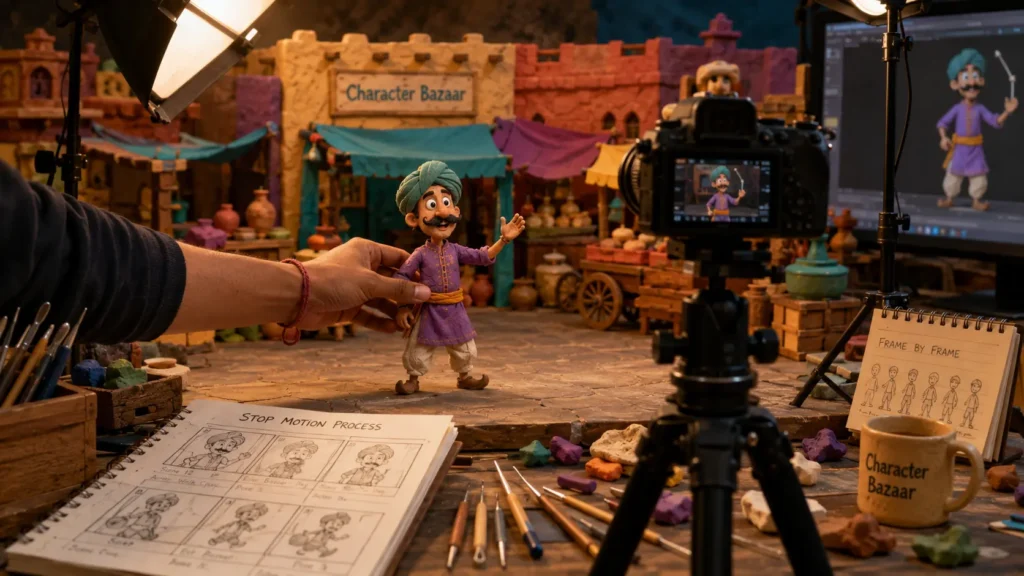
Stop motion is different from digital animation because stop motion is in the real world. Every character, prop, and set is physically constructed.
How Does Stop Motion Animation Work?
The method typically takes the following steps:
- Construct characters and sets.
- Set up the camera.
- Shift the thing a little.
- Snap a picture.
- Do it thousands of times.
- Make a video from the frames
- One second of animation typically consists of 12–24 images.
Types of Stop Motion
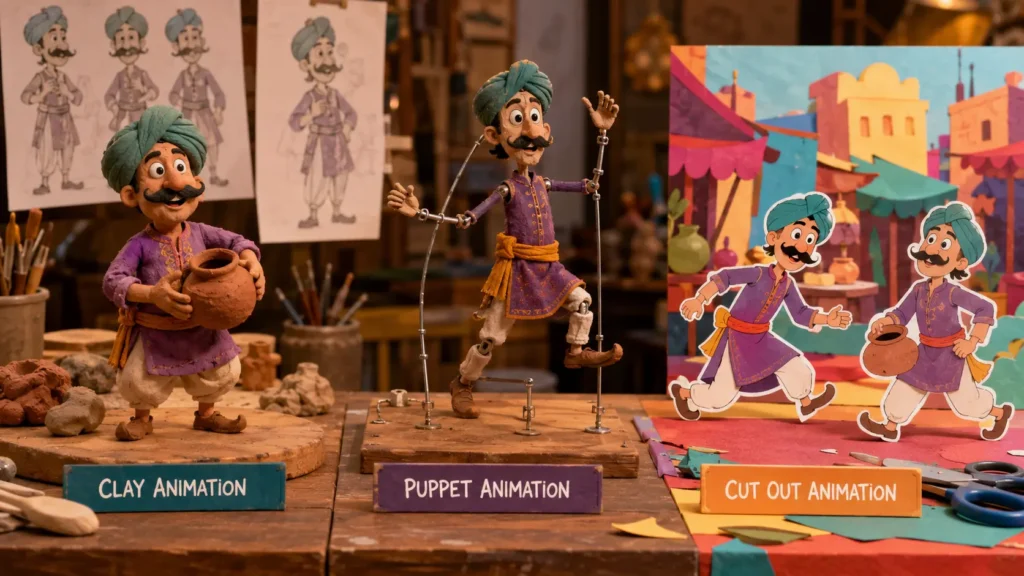
1. Clay Animation
The characters are crafted from clay and animated frame by frame.
Example: Case in point: Wallace and Gromit.
2. Puppet Animation
The articulated puppets have inner skeletons that allow precise movement.
Example: Coraline (2009)
3. Cut Out Animation
Paper or flat materials create motion.
Example: Early South Park episodes.
4. Object Animation
Things from the home become animated characters.
5. Pixilation Animation
The stop-motion subjects are real individuals.
What is Digital Animation?
Digital animation uses computer software to create movement. Artists manipulate drawings, vectors, 3D models, or rigs instead of physical objects.
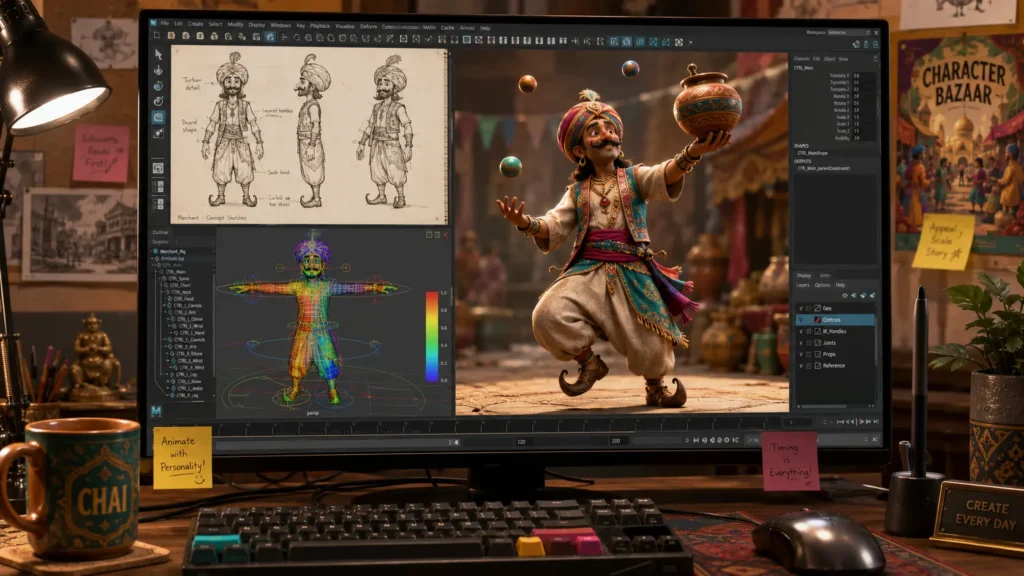
Today, digital animation powers everything from Disney films to mobile games and YouTube videos.
How Does Digital Animation Work?
The workflow typically includes:
- Storyboarding
- Character design
- Rigging
- Animation
- Lighting and rendering
- Editing and post-production
Digital animators rely on software tools that allow revisions and experimentation throughout production.
Types of Digital Animation
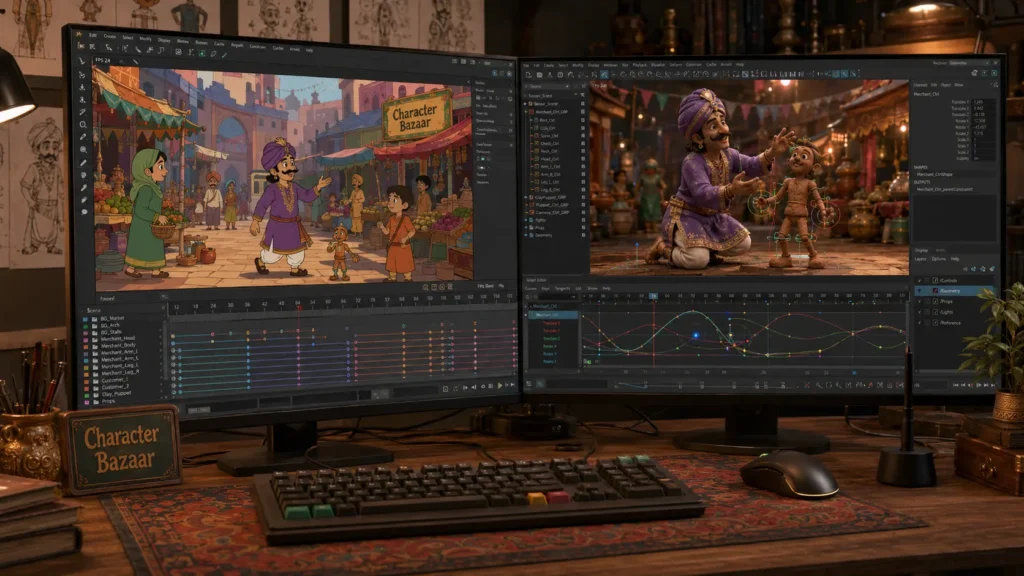
Digital animation is the process of creating moving visuals using computer software and digital tools. It includes techniques like 2D animation, 3D animation, motion graphics, and computer-generated imagery.
1. 2D Animation
Artists animate drawings on a digital canvas.
Examples: The Simpsons, Rick and Morty.
2. 3D Animation
Characters and environments are created in three-dimensional space.
Examples: Toy Story, Frozen.
3. Motion Graphics
Text and graphic elements are animated.
4. CGI and Visual Effects
Computer-generated imagery enhances films and advertisements.
Examples: entirely digital characters (e.g., Gollum in Lord of the Rings) and seamlessly integrating computer graphics into real-world environments (e.g., Avatar)
Stop Motion vs Digital Animation
| Factor | Stop Motion | Digital Animation |
| Creation Method | Physical objects | Computer software |
| Production Speed | Slow | Faster |
| Editing Flexibility | Limited | Highly flexible |
| Initial Cost | Medium to high | Depends on the software |
| Scalability | Difficult | Easier |
| Visual Style | Handmade and tactile | Clean and versatile |
Workflow:
Stop motion involves creating the set, people, and objects before you start to animate. All changes have to take place physically.
In digital animation software pipelines are used, and assets can be modified several times without the need to rebuild them.
Production Time:
Stop motion takes a lot of time.
For Kubo and the Two Strings, animators reportedly only produced a few seconds of usable film a day.
However, digital studios can automate some procedures, reuse equipment, and greatly speed up production.
Cost:
Stop motion expenses include:
- Cameras
- Lighting equipment
- Sets and props
- Materials
- Studio space
Digital animation costs often involve:
- Software subscriptions
- Powerful computers
- Graphic tablets
- Rendering infrastructure
Independent creators can start digital animation with free tools like Blender, making it more accessible.
Equipment:
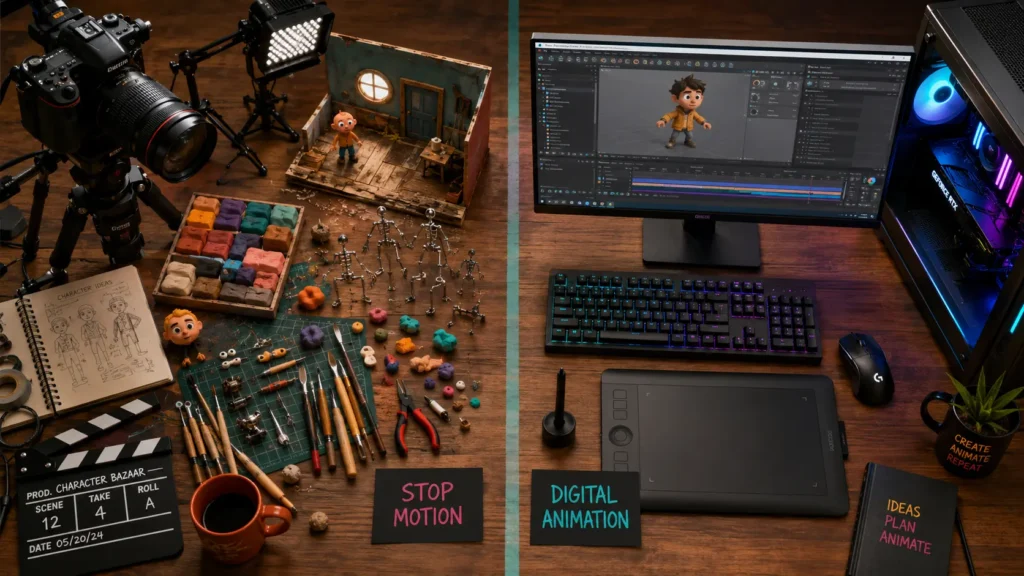
Stop Motion Needs:
- DSLR or mirrorless camera
- Tripod
- Lighting setup
- Physical models
- Studio space
Digital Animation Needs:
- Computer
- Animation software
- Drawing tablet (optional)
- Storage and rendering power
Flexibility and Editing:
The clear winner in this category is Digital Animation.
In stop motion, changing a character’s emotion or movement sometimes entails shooting the sequences again. Assets, timing, and effects are much easier for digital animators to change.
Visual Style:
The stop motion defects are typically seen as authentic and creative by audiences.
Digital animation has almost endless possibilities – from photorealism to stylised cartoons.
Best Use Cases:
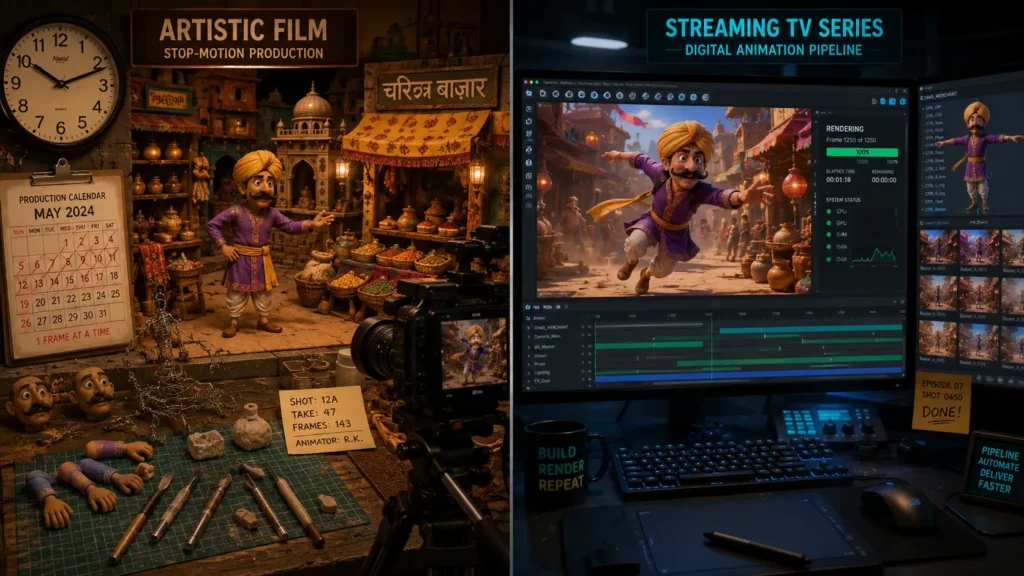
Stop Motion Works Best For:
- Artistic films
- Commercials
- Music videos
- Experimental projects
- Boutique studios
Digital Animation Works Best For:
- TV series
- Streaming content
- Games
- Educational videos
- Social media content
5. Is Stop Motion Outdated?
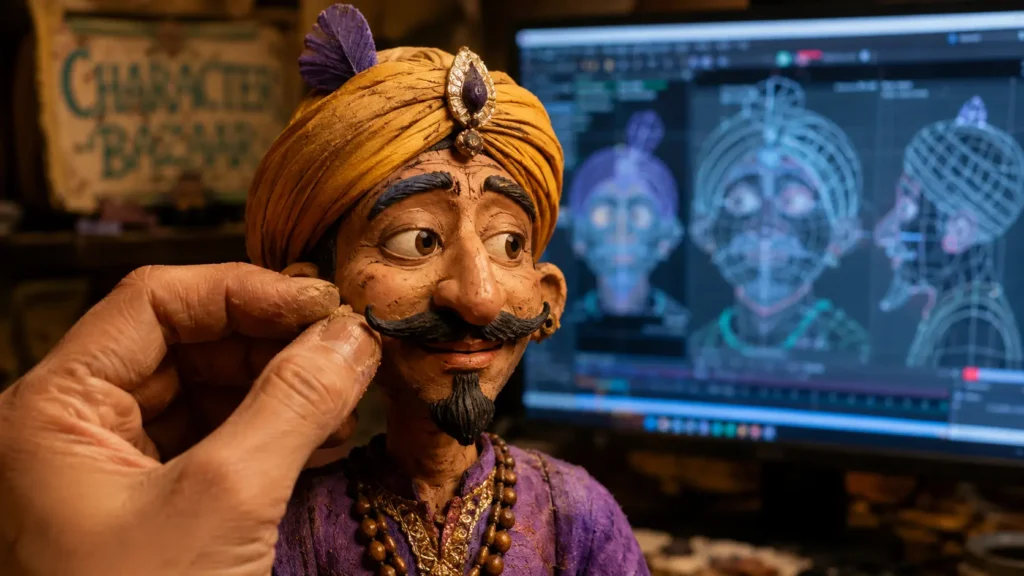
Many believe that stop motion is dead, as today’s entertainment is all about CGI and real-time rendering.
However, that assumption ignores reality.
Studios like Laika continue producing successful stop-motion films such as:
- Coraline
- Kubo and the Two Strings
- ParaNorman
- Missing Link
Wes Anderson’s Fantastic Mr Fox showed that moviegoers still like hand-crafted storytelling.
Brands still utilise stop motion in advertising, since it helps them stand out from all the digital information out there.
Stop motion exists because it has something computers can’t reproduce completely: texture, physicality, human imperfection.
What is Harder: Stop Motion or Digital Animation?
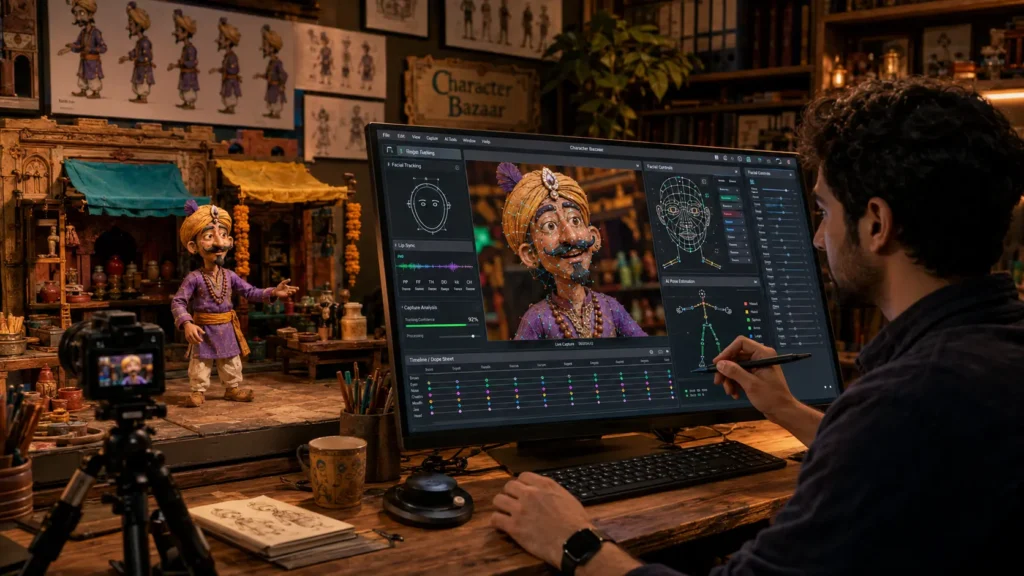
The answer depends on what type of challenge you enjoy.
Stop Motion Challenges
- Requires patience.
- Demands physical craftsmanship.
- Mistakes are costly.
- Lighting must remain consistent.
- Reshoots take time.
Digital Animation Challenges
- Complex software.
- Rigging and rendering.
- Technical workflows.
- Continuous software updates.
For Beginners
Conceptually, stop motion might be easier to learn as you can start with a smartphone and household objects.
There is a higher technical learning curve with digital animation, but greater possibility for improvisation.
Will AI Replace Stop Motion?
Artificial intelligence is already transforming animation operations.
AI tools can help with:
- Interstitial framing
- Generating lip-sync
- Motion capture cleanup
- Designing backgrounds
- Optimizing rendering
But stop motion is a huge constraint for AI.
- Physical puppetry
- Handmade textures
- Artistic imperfections
- On-set craftsmanship
- The emotional value of handcrafted work
AI is likely to be an enabler, not a replacement for stop motion.
The biggest winners will be those animators who blend creativity and technology.
Important Differences between Computer Animation and Stop Motion
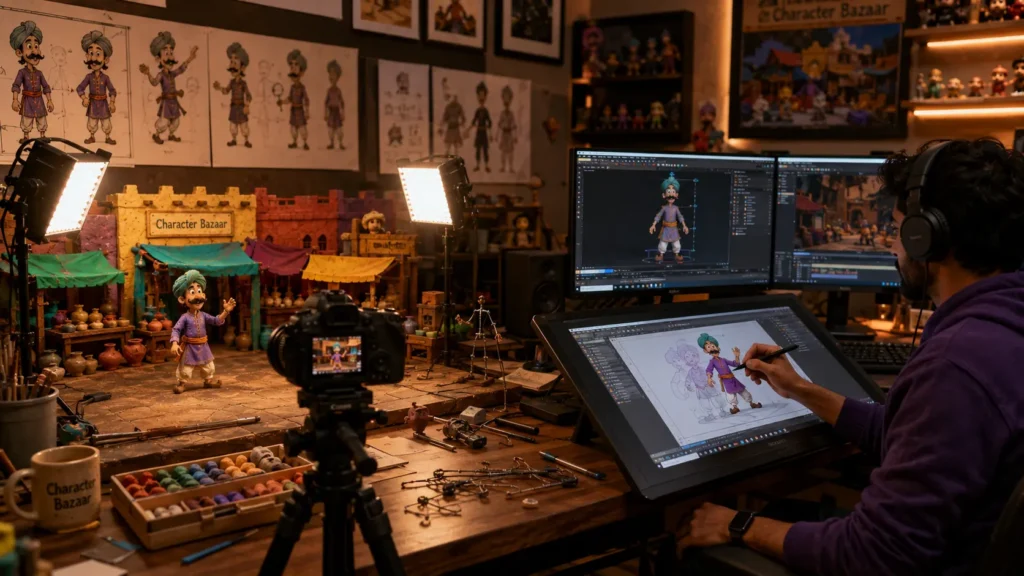
Both systems provide a sense of movement visually now, but the way they tell stories is very different. The main differences between stop motion and computer animation are:
1. Creation Process
Stop motion involves real objects or puppets or clay models that are manipulated and photographed frame by frame .The main differences between stop motion and computer animation are:
2. Tools and Equipment
Stop-motion animators use cameras, lighting, and hand-made sets, whereas computer animators use tools such as Blender, Maya, and Adobe Animate.
3. Creation Process
Computer animation provides far more versatility. Movements, expressions and scenes can readily be modified by artists. In stop-motion, tiny changes mean many frames need to be re-filmed.
4. Production Speed
Stop motion is a time-demanding process – professionals may only get a few seconds of film a day. Computer animation uses reused elements and digital instruments, speeding up production.
5. Cost
Stop motion has costs such as props, supplies and studio space. Computer animation involves a lot of gear and software, but it is more easily scaled up to huge projects.
6. Visual Style
Stop motion is recognised for its handcrafted appearance and lifelike textures, such as in Coraline and Fantastic Mr Fox. Computer animation is limitless in creativity, from stylised cartoons to lifelike worlds like Toy Story and Frozen.
7. Career Paths
Computer animation has become the dominant form in industries like gaming, streaming and advertising, whereas stop motion is a specialised but highly sought-after ability in films and advertisements.
In the end, neither is better. They only serve different creative purposes. In fact, many modern productions use both styles to create something unique.
Future Trends in Animation
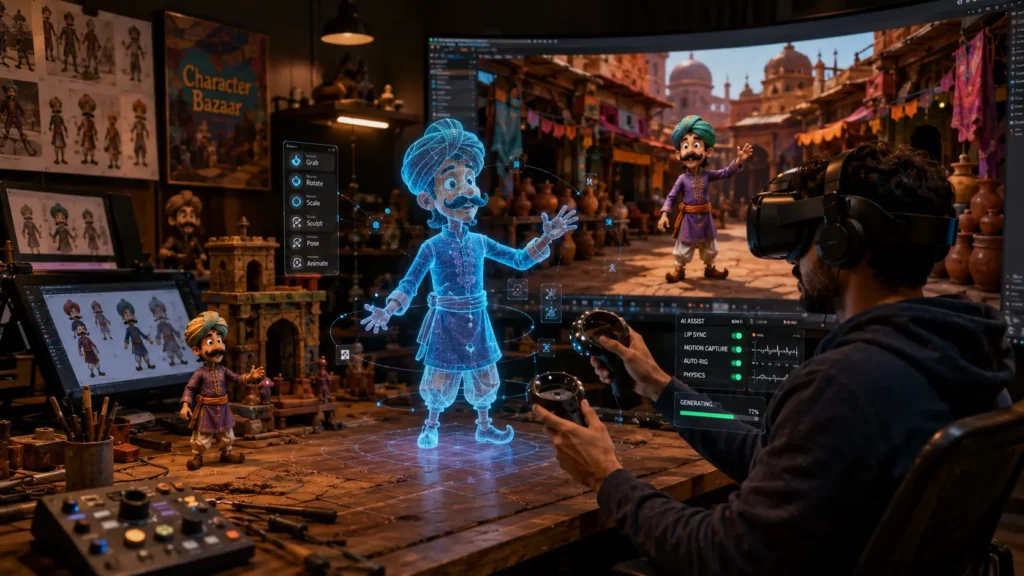
The future is not about choosing between stop motion and digital animation. It is about combining them.
Hybrid Animation Techniques
Films combine stop motion with CGI and visual effects.
Spider-Man: Into the Spider-Verse popularised stylised hybrid workflows.
Real-Time Rendering
Unreal Engine and other game engines are revolutionising animation processes.
Virtual Production
Studios now create environments digitally while filming physical performances.
AR and VR Animation
Immersive storytelling is opening up new possibilities for animators.
Demand for Stylised Animation
Audiences increasingly prefer distinctive visual styles over perfect realism.
Frequently Asked Questions (FAQs)
Is stop motion still popular?
Yes. Major studios, advertisers, and independent creators continue using stop motion because of its unique visual appeal.
Is digital animation easier?
Digital animation is more flexible, but it can take years to learn the program.
Can AI create stop motion?
AI can assist with planning and editing, but it cannot fully replicate handcrafted stop-motion techniques.
Which animation style is more expensive?
Large-scale stop-motion projects are generally more expensive because of physical production requirements.
Can stop motion and digital animation be combined?
Sure. Many recent productions blend actual effects with CGI.
Conclusion:
The debate between stop motion and digital animation does not have a universal winner.
Stop motion offers craftsmanship, texture, and personality. Digital animation provides speed, flexibility, and scalability.
Digital animation typically opens up more professional alternatives for pupils. For artists looking to carve out a unique visual identity, stop motion is still one of the most potent narrative tools out there.
The future of animation probably lies with those creators who understand both worlds – artists who can combine traditional artistry with current technology and know where each medium shines the brightest.
Ultimately, effective animation isn’t about what tools you use. It’s defined by your ability to tell stories that others remember.
